

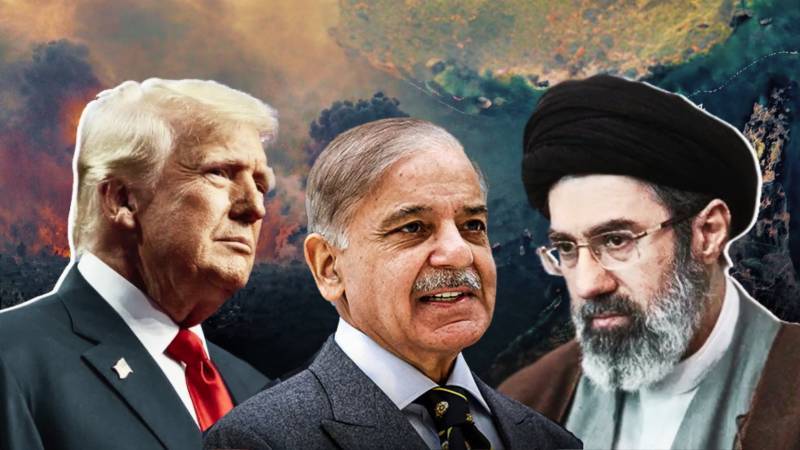
There is a quiet irony in watching Pakistan, a country Donald Trump once accused of harboring terrorists while pocketing American aid, emerge as one of the most consequential diplomatic assets of his second administration.
Yet here we are. As Washington and Tehran find themselves locked in one of the most dangerous standoffs of the decade, it is Islamabad not Brussels, not Riyadh, not Geneva that is discreetly keeping the back channel alive. How that came to pass reveals something profound, not just about Pakistan’s reinvention, but about how nakedly transactional American foreign policy has become under Trump.
For most of his first term, Pakistan existed in Washington’s imagination primarily as a liability to be managed. Aid was frozen. Accusations were hurled across diplomatic channels. The relationship was defined by mutual suspicion dressed in the language of partnership. India, by contrast, was the preferred strategic bet — a democratic counterweight to China, a vast market, a willing geopolitical partner. That calculus has since shifted with striking speed. New Delhi’s stubborn insistence on strategic autonomy, its continued diplomatic flirtation with Moscow, and its cooling toward Washington’s maximalist demands created an opening. Pakistan — nimble, internationally isolated, and governed by a military establishment with a deep institutional instinct for making itself indispensable — stepped into that vacuum.
Field Marshal Asim Munir deserves particular attention in this story. Whatever one’s view of how civil-military relations in Pakistan have evolved, Munir has demonstrated a sharp and methodical strategic intelligence on the international stage. Brokering early ceasefires. Hosting sensitive conversations between American and Iranian interlocutors. Projecting Pakistan as a stable, responsible regional actor. None of this is accidental. It is the product of deliberate, patient positioning by a military leadership that understands, perhaps more clearly than its civilian counterparts, that geography and necessity can be engineered into leverage.
The substance of Pakistan’s improved standing in Washington, however, deserves honest scrutiny beneath the celebratory headlines. This is not a relationship rebuilt on shared democratic values or deepened institutional trust. It is transactional to its foundation — structured around counterterrorism intelligence cooperation, cryptocurrency-linked economic arrangements, and rare-earth mineral deals that slot neatly into America’s accelerating strategic competition with China for critical global resources. This is not an alliance born of conviction. It is an alliance of convenience, and that distinction matters enormously when assessing how long it can hold.
The risks Pakistan is running in this arrangement are significant — and not always sufficiently acknowledged amid the diplomatic triumphalism now echoing out of Rawalpindi. An overcorrection toward American favor, pursued at the cost of balanced relationships with China, Iran, or even domestic political legitimacy, could leave Pakistan dangerously exposed the moment Washington’s priorities shift — as they inevitably will. The Trump administration’s record on loyalty to its partners is, to use the diplomatic register it rarely deserves, uneven. Pakistan has lived through this before. The most painful lesson came in the aftermath of the Soviet-Afghan war, when Islamabad was systematically abandoned the moment its utility to Washington expired.
There is also the harder, more fundamental question of whether Pakistan can actually deliver on what is being quietly asked of it. Brokering a ceasefire is one kind of diplomatic achievement. Engineering a durable, substantive de-escalation between the United States and Iran is an entirely different order of magnitude. Tehran operates on its own strategic logic, carries its own formidable domestic pressures, and holds a long, bitter memory of American betrayals stretching back decades. No degree of goodwill, sincerity, or shuttle diplomacy from Islamabad will substitute for the concrete concessions that any genuine diplomatic settlement will require from both Washington and Tehran directly. Pakistan can open doors. It cannot walk through them on anyone else’s behalf — and it would be wise to remember that before mistaking access for influence.