

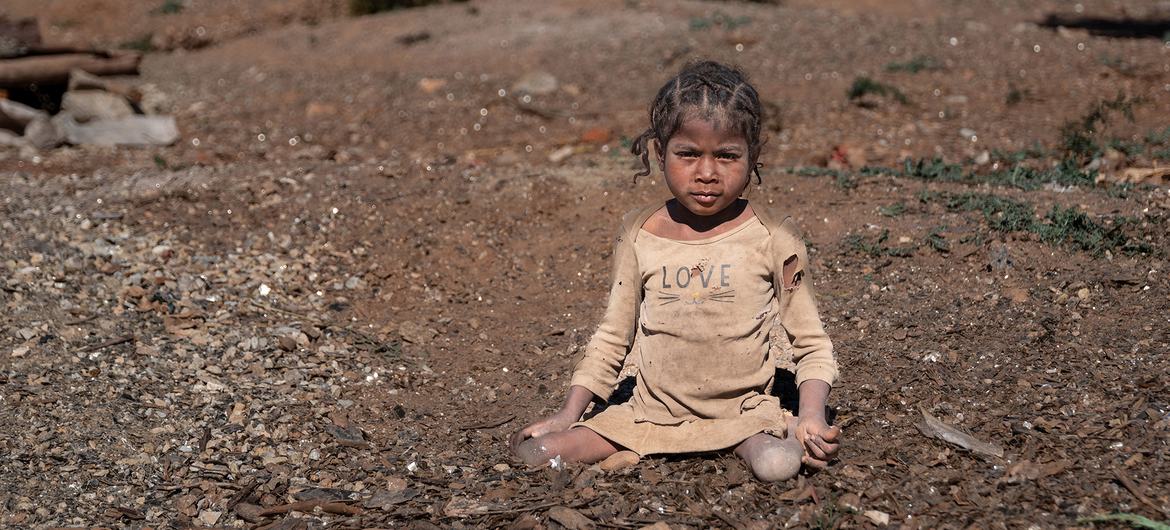
Somewhere in the Sahel this morning, a child woke before sunrise. Not for school, not for breakfast, but for work. The goats needed feeding, the fields needed tending, and the family needed the small income that would come before the heat became unbearable. The child is eight years old. They do not know it is World Day Against Child Labour. They only know that the day has already begun, and survival has its own schedule.
In 2015, the world made a promise to end child labour by 2025. That promise has now expired. According to the latest ILO and UNICEF estimates, around 138 million children remain in child labour worldwide. The commitment was signed, repeated, and celebrated in global forums. The reality on the ground did not change fast enough.
Behind this number lies something harder to ignore. One hundred and thirty-eight million children is roughly the population of France and Germany combined. Stripped of schooling, safety, and the freedom of childhood, they form a silent global workforce that should never have existed.
Of these children, around 54 million are engaged in hazardous work that threatens their health and development. Nearly one in five is under the age of twelve. These are not teenagers making difficult choices in struggling economies. These are children who should be learning how to read, not how to survive adult labour.
Progress has been made. Since 2000, child labour has declined by about 100 million. Yet the pace remains painfully slow. Progress is visible in statistics but insufficient in justice. Millions remain trapped in cycles that reform has not yet broken.
The burden is not shared equally. Sub-Saharan Africa carries the highest weight, accounting for nearly two-thirds of global child labour. In several countries, nearly half of all children are involved in economic activity. These are not marginal figures. They describe societies where child labour is deeply embedded in daily life.
South Asia also remains heavily affected, with tens of millions of children still working across agriculture, domestic labour, and informal industries. In Pakistan, despite legal protections and institutional frameworks, millions of children remain out of school and engaged in labour to support household survival. The gap between law and reality remains wide.
Conflict zones deepen the crisis further. In countries facing war or instability, child labour rises as education systems collapse and incomes disappear. In parts of the Democratic Republic of Congo, children are drawn into mining supply chains linked to global technology industries. In Yemen and Sudan, conflict and poverty reinforce each other, forcing children into labour as a matter of necessity rather than choice.
Most child labour does not take place in factories but in fields. Around 61 percent occurs in agriculture. Small farms, plantations, and rural households dominate the global picture. Much of this work is informal and often classified as family contribution, making it harder to regulate and easier to overlook.
Girls remain largely invisible in official counts. While boys appear more frequently in statistics, much of girls’ labour happens inside homes, in unpaid domestic work such as cooking, cleaning, and caregiving. Because this work is not formally classified as economic activity, it is often excluded from global estimates, masking the true scale of their burden.
The story of child labour is not only statistical. It is also human. In Pakistan, Iqbal Masih became a global symbol of resistance against bonded labour before his life was cut short in 1995. His story reflects a deeper truth. Child labour is not only a policy failure. It is a structural and moral one, sustained by poverty, inequality, and weak protection systems.
Governments have signed conventions and passed laws, but enforcement remains uneven. Families often rely on child income to survive. Informal economies are difficult to regulate. Global supply chains remain partially disconnected from the conditions under which goods are produced.
Ending child labour will require more than renewed promises. It will require social protection systems that protect families during economic shocks, education systems that function in rural and crisis-affected regions, and fair wages that reduce dependence on child income. It will also require accountability across global production networks that still benefit from invisible child labour.
The world missed its 2025 deadline. To meet the next one, progress would need to accelerate dramatically. But behind every target is a simple reality that does not change with policy cycles: millions of children are still working when they should be learning.
In the Sahel, the child wakes again tomorrow before sunrise. The world has already moved on to new promises. The child has not moved at all.