

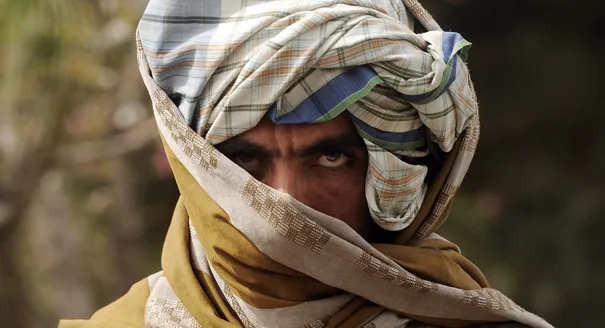
For years, Pakistan has consistently warned the international community that Afghanistan under Taliban rule has become a sanctuary for terrorist organizations, particularly the Tehreek-e-Taliban Pakistan (TTP). Those warnings were often treated as part of a bilateral dispute or overshadowed by broader humanitarian concerns surrounding Afghanistan. That diplomatic hesitation now appears to be fading.
Recent public statements by the United Kingdom’s Special Representative for Afghanistan, Richard Lindsay, and the European Union’s Special Envoy, Gilles Bertrand, represent a significant shift in international thinking. Their remarks were not simply expressions of concern. They reflected a growing willingness among Western governments to publicly acknowledge that the Taliban bears responsibility for allowing terrorist groups to operate freely from Afghan territory.
Richard Lindsay openly stated that TTP militants who carry out attacks inside Pakistan continue to find refuge across the Afghan border. He further acknowledged that the Taliban provides the group with operational freedom, access to weapons, and financial support, enabling it to sustain its campaign of violence. More importantly, he recognized Pakistan’s right under international law to defend itself against cross-border terrorist threats, an acknowledgement that carries considerable diplomatic and legal significance.
Gilles Bertrand delivered an equally direct message. Describing the TTP as a terrorist organization, he stressed that the Taliban, as the de facto authority governing Afghanistan, bears sovereign responsibility for ensuring that Afghan territory is not used to launch attacks against neighboring states. His statement reinforced the principle that no government can escape accountability when terrorist groups operate openly within its borders.
Neither official introduced new evidence. The facts have been documented for years by the United Nations Security Council’s Monitoring Team. The 35th, 36th, and 37th reports, along with the Sixteenth Analytical Support and Sanctions Monitoring Team report, have consistently highlighted the presence of more than twenty terrorist organizations inside Afghanistan. These assessments estimate that between 13,000 and 23,000 militants remain active across the country, including approximately 6,000 to 6,500 members and family units affiliated with the TTP, primarily concentrated in Afghanistan’s eastern provinces.
Perhaps the clearest illustration of Taliban complicity emerged in 2022, when al-Qaeda leader Ayman al-Zawahiri was killed in a Taliban-controlled safe house in Kabul. That incident exposed the gap between the Taliban’s public commitments and the realities on the ground. The significance of the recent European statements lies not in presenting fresh intelligence, but in publicly assigning responsibility for facts that have long been established.
Since the Taliban returned to power in August 2021, international engagement with Kabul has been shaped by two competing priorities. On one side stood the humanitarian need to prevent the collapse of Afghan society. On the other was the security imperative of ensuring that Afghanistan would not once again become a base for international terrorism. For several years, humanitarian concerns largely dominated diplomatic engagement, encouraging Western governments to avoid publicly confronting the Taliban over terrorism for fear of undermining humanitarian access.
That balance is now changing.
An increasingly broad international consensus has emerged regarding Afghanistan’s deteriorating security environment. Russia has repeatedly warned that more than twenty terrorist organizations continue to operate inside Afghanistan, with estimates ranging between 18,000 and 23,000 militants. China has consistently urged the Taliban to eliminate the Tehreek-e-Taliban Pakistan (TTP), the East Turkestan Islamic Movement (ETIM), al-Qaeda, and the Islamic State Khorasan Province (ISKP). The United States has criticized the Taliban for failing to uphold its counterterrorism commitments under the Doha Agreement. Pakistan has maintained this position consistently from the outset. The recent statements from senior European representatives demonstrate that Europe is increasingly aligning with this broader international assessment.
For Pakistan, the implications are particularly important. The country’s western frontier has witnessed a sharp rise in terrorist violence, including attacks on military installations, suicide bombings, and assaults targeting civilians and development workers. Much of this violence has been linked to TTP elements operating from sanctuaries inside Afghanistan. Lindsay’s recognition that Pakistan possesses the right to self-defense under international law sends an important diplomatic signal that Islamabad’s security concerns are no longer being viewed merely as bilateral grievances.
The consequences extend beyond Pakistan. Central Asian states have also become increasingly concerned about militant infiltration, extremist recruitment, and cross-border terrorism originating from Afghanistan. Regional organizations such as the Shanghai Cooperation Organisation (SCO), the Collective Security Treaty Organization (CSTO), and the Moscow Format have repeatedly expressed alarm over Afghanistan’s transformation into a hub for terrorist activity. Europe’s growing alignment with these concerns reflects a broader understanding that the Afghan security challenge affects regional and international stability alike.
The Taliban’s obligations were clearly established under the Doha Agreement signed in February 2020. The movement committed itself to ensuring that Afghan territory would never again be used to threaten the security of other countries. Nearly five years later, the cumulative evidence presented by United Nations monitoring reports, multilateral security assessments, and increasingly direct diplomatic statements suggests that this commitment remains unfulfilled.
The international community is gradually abandoning the language of diplomatic ambiguity. The recent statements by senior British and European officials illustrate a growing willingness to publicly hold the Taliban accountable for the terrorist infrastructure operating within Afghanistan. For Kabul, the message is increasingly clear. International legitimacy, diplomatic recognition, and the normalization of relations with the outside world will depend not on official assurances, but on verifiable action against terrorist organizations operating from Afghan soil.
Europe’s evolving position is therefore more than a shift in rhetoric. It reflects a broader international realization that patience is wearing thin, and that accountability can no longer be postponed while terrorist groups continue to enjoy sanctuary inside Afghanistan.